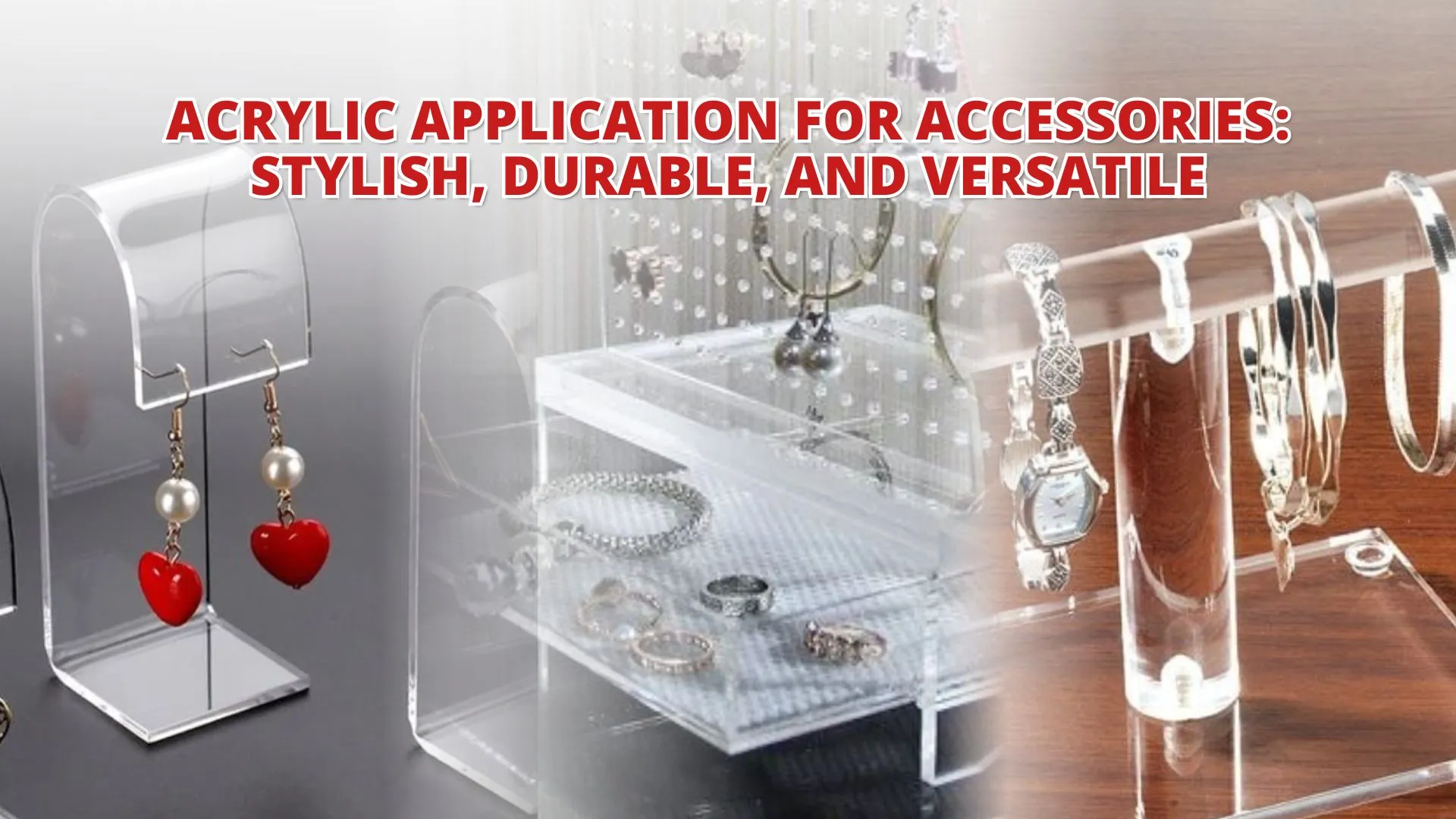
Acrylic Application for Accessories: Stylish, Durable, and Versatile

Informational

Cast acrylic sheets have become one of the most popular materials in the fashion and lifestyle industry. It can also offer endless design possibilities for accessories. 

From jewelry to display stands, acrylic provides both functionality and aesthetic appeal, making it an ideal choice for modern accessories.

Why Acrylic Works Well for Accessories

Cast acrylic sheets offer several advantages that make them suitable for wearable and decorative items. Acrylic is lightweight, making it comfortable to wear as jewelry.

It is also highly versatile; designers can cut, engrave, bend, polish, or print on acrylic to achieve various styles and creative finishes.

Its durability ensures that accessories maintain their shape and color over time, while its smooth surface gives a premium look similar to glass, without the fragility.

Another key benefit is the availability of acrylic sheets in different colors, textures, and transparency levels. Whether the goal is to create a minimal, elegant design or a bold statement piece, acrylic can match almost any creative concept.

Read also: Does Acrylic Shatter? Find Out Its Strength and Durability

Popular Acrylic-Based Accessories and Their Applications

1. Acrylic Bracelets

Acrylic bracelets are widely appreciated for their modern and minimalist appearance. They can be produced in clear, opaque, or patterned finishes and shaped using heat to create various designs.

Their lightweight nature makes them comfortable for daily wear, while their smooth surface offers a clean, polished look.

2. Acrylic Necklaces

Necklaces made from acrylic often feature geometric shapes, layered designs, or laser-cut artwork.

Clear or colored acrylic pendants provide a striking visual effect, and the material’s durability ensures the necklace remains scratch-resistant and long-lasting.

3. Acrylic Earrings

Acrylic earrings allow designers to experiment with bold shapes and vibrant colors. From large statement earrings to delicate studs, acrylic can be cut into intricate designs with high precision.

The material is also hypoallergenic, making it safe for most users.

4. Acrylic Keychains

Acrylic keychains are popular for both personal use and promotional items. They can be printed with artwork, engraved with names, or shaped into custom forms.

Acrylic’s durability ensures that keychains resist scratches and wear, even with daily use.

5. Acrylic Earring Display Stands

Beyond wearable accessories, acrylic is also used to create elegant display stands for jewelry stores or craft exhibitions.

Clear acrylic stands highlight the earrings without distracting from the product, while colored acrylic offers a more stylish presentation. The material’s rigidity ensures the stand remains stable and functional.

Read also: Acrylic Ideas for Home Decor You'll Love

6. Additional Acrylic Accessories

Other accessories include bag charms, phone charms, hair clips, brooches, and decorative desk items. Acrylic’s flexibility in design makes it suitable for both fashion-forward items and functional lifestyle accessories.

Conclusion

Acrylic accessories offer a combination of beauty, durability, and creative freedom that few materials can match.

With cast acrylic sheets from Marga Cipta, designers and brands can produce high-quality bracelets, earrings, keychains, display stands, and more.

As the demand for modern and customizable accessories continues to grow, acrylic remains one of the most versatile and reliable materials for stylish fashion and lifestyle products.

At Margacipta Wirasentosa, we supply premium cast acrylic sheets in a wide range of thicknesses, colors, and finishes to suit your unique project needs.

Ready to upgrade from glass to acrylic?

Visit our Instagram for more details about our cast acrylic sheets.


News Release

Why Does Acrylic Turn Yellow? Causes and Prevention

High-quality acrylic sheets are highly resistant to yellowing, but certain environmental conditions and material quality can affect their appearance over time. 

If acrylic becomes yellow, it is often due to prolonged UV exposure, harsh chemicals, excessive heat, or the use of low-quality materials.

Understanding why acrylic turns yellow can help businesses and fabricators choose the right material and maintain its clarity for years.

Does Acrylic Naturally Turn Yellow?

Unlike some plastics, acrylic is well known for its excellent optical clarity and UV resistance.

Premium cast acrylic sheets are manufactured to withstand outdoor exposure while maintaining their transparency and color stability. In many applications, high-quality acrylic can remain clear for years with proper care.

However, not all acrylic sheets offer the same level of performance.

Read also: Best Way to Glue Acrylic Sheet: Adhesives and Application Tips

Common Causes of Acrylic Yellowing

1. Prolonged UV Exposure

Although acrylic is naturally UV-resistant, continuous exposure to intense sunlight over many years may gradually affect lower-quality materials.

UV radiation can accelerate material aging, especially if the acrylic is not designed for outdoor applications.

Using UV-resistant acrylic sheets helps minimize this risk.

2. Poor Material Quality

Material quality is one of the biggest factors influencing long-term appearance.

Lower-quality acrylic may:

  • Yellow more quickly
  • Lose transparency
  • Become brittle over time
  • Develop surface imperfections

Premium cast acrylic generally provides better color stability and weather resistance.

3. Harsh Cleaning Chemicals

Cleaning acrylic with unsuitable chemicals may damage its surface.

Avoid using:

  • Ammonia-based cleaners
  • Strong solvents
  • Alcohol-based cleaners
  • Abrasive cleaning products

These chemicals can weaken the surface and contribute to discoloration over time.

Instead, use acrylic-safe cleaners and a soft microfiber cloth.

4. Excessive Heat

Exposure to high temperatures for extended periods can accelerate the aging process of acrylic.

While acrylic performs well in many environments, excessive heat combined with UV exposure may gradually reduce its visual quality.

5. Improper Storage

Storing acrylic sheets in unsuitable environments can also affect their appearance.

To maintain quality:

  • Store sheets indoors when possible
  • Keep them away from excessive sunlight before installation
  • Protect surfaces from dust and contaminants

Proper storage helps preserve the material before fabrication.

How to Prevent Acrylic from Turning Yellow

The best way to maintain acrylic clarity is through proper material selection and maintenance.

Recommended practices include:

  • Choose premium UV-resistant acrylic sheets.
  • Clean using acrylic-safe cleaning solutions.
  • Avoid harsh chemicals and abrasive tools.
  • Install the correct acrylic grade for outdoor applications.
  • Follow manufacturer recommendations for handling and maintenance.

These simple steps can significantly extend the lifespan of acrylic products.

Why High-Quality Acrylic Matters

Premium acrylic sheets offer several long-term advantages, including:

  • Excellent UV resistance
  • Superior optical clarity
  • Better weather durability
  • Improved color stability
  • Consistent performance over time

Choosing high-quality acrylic helps reduce maintenance and improves the longevity of finished products.

Marga Cipta manufactures premium cast acrylic sheets suitable for signage, displays, architectural features, retail applications, and other projects that require long-lasting clarity and performance.

Read also: How Long Does Acrylic Last Outdoors? Lifespan, UV Resistance, and Maintenance

Conclusion

So, why does acrylic turn yellow? In most cases, yellowing is caused by prolonged UV exposure, harsh chemicals, excessive heat, or poor material quality.

By selecting premium UV-resistant acrylic sheets and following proper maintenance practices, businesses can keep acrylic products clear, durable, and visually appealing for many years.

Choose High-Quality Acrylic for Long-Lasting Performance

Marga Cipta offers premium cast acrylic sheets designed for excellent clarity, weather resistance, and durability across a wide range of applications.

For inquiries or orders, email info@margacipta.com.

For product updates, inspiration, and application ideas, follow Instagram @margacipta.

Laser Cut Acrylic Sheet: Benefits, Applications, and Design Tips

Laser cut acrylic sheet is widely used because it delivers clean edges, precise cuts, and exceptional design flexibility. 

From retail displays and signage to decorative products and industrial components, laser cutting allows acrylic sheets to be fabricated into intricate shapes with high accuracy.

Its precision and efficiency make laser cutting one of the most popular fabrication methods for acrylic.

What Is Laser Cutting?

Laser cutting is a fabrication process that uses a focused laser beam to cut acrylic sheets with exceptional precision.

The concentrated heat melts and vaporizes the material along the cutting path, producing smooth edges that often require minimal finishing.

This method is suitable for both simple shapes and highly detailed designs.

Read also: Acrylic Sheet for Menu Holders: Durable Display Solutions

Benefits of Laser Cut Acrylic Sheet

1. High Precision

Laser cutting can produce complex patterns and intricate details with consistent accuracy.

This makes it ideal for custom products and decorative applications.

2. Smooth, Polished Edges

One of the biggest advantages of laser cutting is the clean edge finish.

High-quality acrylic sheets often produce polished edges directly from the cutting process, reducing the need for additional finishing.

3. Efficient Production

Laser cutting supports both prototype development and large-scale manufacturing.

Its automation capabilities help improve productivity while maintaining consistent quality.

4. Design Flexibility

Laser-cut acrylic can accommodate a wide range of creative and functional designs, from simple geometric shapes to intricate decorative patterns.

Common Applications

Laser-cut acrylic sheets are widely used across various industries. Popular applications include:

1. Signage

Custom business signs, illuminated letters, and branding elements.

2. Retail Displays

Product stands, display cases, shelf organizers, and promotional fixtures.

3. Decorative Products

Wall décor, ornaments, cake toppers, and personalized gifts.

4. Office and Commercial Displays

Directory signs, information boards, and nameplates.

5. Industrial Components

Machine covers, protective panels, and fabricated plastic parts.

Design Tips for Better Results

To maximize laser cutting quality, consider the following:

1. Choose the Right Thickness

Different applications require different acrylic thicknesses to balance durability and precision.

2. Use High-Quality Acrylic

Premium acrylic sheets typically produce cleaner cuts and smoother edges.

3. Optimize Design Files

Vector-based artwork helps ensure accurate cutting and consistent production.

4. Consider Material Finish

Clear, colored, satin, frosted, and mirrored acrylic each create different visual effects in finished products.

Why Material Quality Matters

Laser cutting results depend not only on the machine but also on the quality of the acrylic sheet. High-quality acrylic offers:

  • Better cutting consistency
  • Cleaner polished edges
  • Reduced risk of defects
  • Improved dimensional accuracy
  • More professional final appearance

Marga Cipta supplies premium acrylic sheets suitable for laser cutting, engraving, CNC machining, and other fabrication applications.

Read also: What Acrylic to Use for Cake Topper: A Complete Material Guide

Conclusion

Laser cut acrylic sheet combines precision, efficiency, and design flexibility, making it one of the best fabrication solutions for modern acrylic products.

Whether you're creating signage, retail displays, decorative items, or custom components, using high-quality acrylic sheets helps ensure clean cuts and professional results.

Marga Cipta offers premium acrylic sheets in various thicknesses, colors, and finishes for laser cutting and custom fabrication projects.

For inquiries or orders, email info@margacipta.com.

For product information, inspiration, and the latest updates, follow Instagram @margacipta.

Acrylic Sheet for Display Stand: Best Thickness and Type to Use

Acrylic sheet has become one of the most popular materials for display stands due to its clarity, durability, and versatility. Whether used in retail stores, exhibitions, or offices, choosing the right acrylic sheet for display stand is essential to ensure both aesthetics and functionality.

However, many people still struggle to determine the best thickness and type for their specific needs.

Why Acrylic Sheet is Ideal for Display Stands

Acrylic offers several advantages compared to glass or other materials:

  • High transparency similar to glass but lighter
  • Shatter-resistant and safer to use
  • Easy to fabricate (cutting, bending, engraving)
  • Professional and modern appearance

These qualities make acrylic sheets a top choice for product displays, signage, brochure holders, and more.

Read also: A Step-by-Step Guide on How to Cut Acrylic Sheet Safely

Best Thickness for Acrylic Display Stand

Choosing the right thickness depends on the size and purpose of the display.

Here are common recommendations:

  • 2-3 mm:
    Suitable for small, lightweight displays such as price tags or brochure holders.
  • 4-5 mm:
    Ideal for medium-sized display stands with moderate weight.
  • 6 mm and above:
    Recommended for larger or heavy-duty displays that require extra strength and stability.

Using acrylic that is too thin may cause bending or cracking, while overly thick sheets can increase costs unnecessarily.

Types of Acrylic Sheet

Understanding the different types of acrylic is equally important.

1. Cast Acrylic

  • Higher clarity and premium finish
  • Better for laser cutting and polishing
  • More durable and resistant to chemicals

Best for high-end display stands where appearance matters.

2. Extruded Acrylic

  • More affordable
  • Consistent thickness
  • Easier for mass production

Suitable for standard display applications with budget considerations.

Clear vs Colored Acrylic

  • Clear acrylic: Most common, ideal for showcasing products without distraction
  • Colored acrylic: Adds branding and visual appeal
  • Frosted acrylic: Provides a premium, soft look and reduces glare

The choice depends on branding and display goals.

Read also: How to Choose UV Resistant Acrylic Sheets for Outdoor Applications

Tips for Choosing the Right Acrylic Sheet

To ensure the best result:

  • Match thickness with the load and size of display
  • Choose cast acrylic for premium finishes
  • Consider environment (indoor vs outdoor use)
  • Ensure proper cutting and bending process

Common Mistakes to Avoid

  • Using acrylic that is too thin for heavy products
  • Ignoring surface finish quality
  • Choosing the wrong type for fabrication method

These mistakes can reduce durability and visual impact.

Conclusion

Selecting the right acrylic sheet for the display stand involves balancing thickness, type, and purpose. By understanding these factors, you can create displays that are both durable and visually appealing.

Looking for high-quality acrylic sheets?

Marga Cipta provides a wide range of acrylic sheets with various thicknesses and types, suitable for display stands, signage, and custom applications. Get the right material to elevate your display quality.

What Is Acrylic Made Of? Composition, Properties, and Uses Explained

Acrylic is made from polymethyl methacrylate (PMMA), a transparent thermoplastic created from methyl methacrylate (MMA) monomers. This material is known for its excellent clarity, durability, and versatility, making it one of the most widely used alternatives to glass.

From signage and displays to architectural and industrial applications, acrylic sheets are valued for their combination of strength, aesthetics, and ease of fabrication.

Understanding what acrylic is made of can help businesses, designers, and manufacturers choose the right material for their projects.

Read also: What is Satin Acrylic? A Complete Guide to Its Look and Function

What Is Acrylic?

Acrylic is a synthetic plastic material that belongs to the family of thermoplastics. The most common form of acrylic used in sheets is PMMA, which is produced through a polymerization process.

During manufacturing, small molecules called methyl methacrylate monomers are chemically bonded together to form long polymer chains. The result is a strong, transparent material with excellent optical properties.

Because of its glass-like appearance and practical advantages, acrylic has become a popular material in various industries.

Main Components of Acrylic

The primary ingredient in acrylic is:

Polymethyl Methacrylate (PMMA)

PMMA is a transparent plastic that offers:

  • High optical clarity
  • Good weather resistance
  • Lightweight performance
  • Excellent fabrication flexibility

This composition gives acrylic its distinctive combination of transparency and durability.

Depending on the manufacturing process, additives may also be incorporated to enhance specific properties such as UV resistance, color stability, or surface finish.

Key Properties of Acrylic

One of the reasons acrylic is so widely used is its unique set of material properties.

Excellent Clarity

Acrylic offers outstanding light transmission, allowing it to achieve a clear and bright appearance. This makes it ideal for applications where visibility is important.

Lightweight Structure

Compared to glass, acrylic is significantly lighter, making transportation, installation, and fabrication easier.

Weather Resistance

High-quality acrylic sheets can withstand prolonged exposure to sunlight and outdoor conditions while maintaining their appearance.

Impact Resistance

Although not as impact-resistant as polycarbonate, acrylic is generally stronger and more durable than traditional glass.

Easy Fabrication

Acrylic can be cut, drilled, engraved, thermoformed, and printed, making it suitable for a wide range of custom projects.

Common Types of Acrylic Sheets

Acrylic sheets are available in various forms, including:

  • Clear acrylic sheets
  • Colored acrylic sheets
  • Frosted acrylic sheets
  • Satin acrylic sheets
  • Mirrored acrylic sheets

Each type is designed to meet different aesthetic and functional requirements.

Common Uses of Acrylic

Because of its versatility, acrylic is used in numerous applications.

Popular examples include:

1. Signage and Displays

Acrylic's clarity and printability make it a preferred material for retail and commercial signage.

2. Interior Design

Decorative panels, partitions, and furniture elements often utilize acrylic for its modern appearance.

3. Industrial Applications

Many industries use acrylic for machine guards, protective covers, and fabricated components.

4. Architectural Features

Acrylic is frequently incorporated into building designs, skylights, and decorative structures.

Read also: Is Acrylic Waterproof? Understanding Its Water Resistance

Why Material Quality Matters

Not all acrylic sheets offer the same performance.

High-quality acrylic provides:

  • Better clarity
  • Consistent thickness
  • Improved weather resistance
  • Reliable fabrication results

Marga Cipta supplies premium acrylic sheets suitable for signage, displays, interiors, fabrication, and industrial applications.

Conclusion

So, what is acrylic made of? Acrylic is primarily composed of polymethyl methacrylate (PMMA), a transparent thermoplastic known for its durability, clarity, and versatility.

Its unique composition allows it to be used across a wide range of industries and applications. By choosing high-quality acrylic sheets, businesses and manufacturers can achieve reliable performance and professional results.

Ready to explore our cast acrylic options? At Margacipta Wirasentosa, we offer high-quality clear cast acrylic sheets from 100% virgin MMA in various thicknesses and custom sizes to fit your needs.

Reach out to our Instagram or download our Product Catalog for more information.